
Transcript of There’s a Woman on the Stage
There is a scene in “Shakespeare in Love”, when Simon Callow, portraying Sir Edmund Tilney, the “Master of the Revels”, who was responsible for the censorship of drama in England, arrives at the Rose Theatre, and shortly afterwards, cries, “…So, a woman on the stage…”, because he had heard there was a woman performing on the stage at the Rose.
The woman was Gwyneth Paltrow’s character Viola de Lesseps, who had disguised herself as a man, Thomas Kent, because she wanted to act on the stage, and later in the scene, a young member of the company played a cruel trick by dropping a mouse down the back of her costume, and in trying to remove the mouse, dislodges her short haired wig to reveal, her long blond hair.
And shortly before leaving, Tilney proclaims “…this theatre is closed…”.
Welcome to “Trans Wise Trans Strong”, I am Carolyne O’Reilly.
Episode five, “There’s a Woman on the Stage”
Given that women’s roles were then portrayed by men, consider those Shakespeare plays where a female character disguises themselves as a man, which of course was a male actor cross-dressed as a female character, who disguises themself as a man.
Given that, for Elizabethan audiences, female roles being portrayed by men was the norm, how would, I wonder, a modern audience respond in comparison.
Although there was no law that forbade women performing on the stage, in fact it’s unclear as to why this seeming prohibition existed, it seems it was just the accepted practice, although later whilst Charles the first was still intimately attached to his head, women did perform on the stage.
Except they were not English but French, as in Europe there was a totally different attitude to women performing on the stage, that attitude being, why not?
However during the English Civil War, both sexes no longer appeared on the stage, as theatres were closed and this continued during the period referred to as the, Interregnum.
Interregnum is defined as, a period when a country or organization does not have a leader, which I imagine would have come as somewhat of a surprise to the Lord Protector.
I am pretty sure, Oliver Cromwell was convinced that, he was the leader of the country, given that Charles the first had now been reduced to a spectral guest spot at Oxford University's Christ Church College and the Bodleian library.
However, with the commencement of the reign of Charles II, also known as The Restoration, theatres were once more open, and the first British female actor took to the stage.
Margaret Hughes is generally considered to be that first British female actor, or should that be actress?
As to which word to use for a woman acting, actor or actress, there does not seem to be any clear answer, as some women will describe themselves as an actor, whilst others as an actress.
Whichever term you prefer, the role Margaret Hughes performed was that of Desdemona, in Othello on the 8th of December 1660.
However whilst women could now portray female roles, that did not mean that men no longer portrayed female roles, in fact men still took the plum female roles, a sexist attitude that continues today, with women generally paid less than men in a comparable acting roles.
However, over time this practice of crossdressing faded, except for one particular role in pantomime, that of the Pantomime Dame.
Pantomime’s roots go back to the 16th-century Italian entertainment of the “Commedia dell‘arte”, which had a host of characters including Harlequin, and pantomime first made its appearance in early 18th century Britain, with Harlequin as the star character.
A notable Harlequin was portrayed by John Rich, whose pantomime’s were so popular that they were able to finance the building of the Theatre Royal, Covent Garden, in 1732.
But it was at the beginning of the 19th century that the Pantomime Dame first made an appearance, in “Harlequin and the Mother Goose” or “The Golden Egg”.
The play was written by Thomas John Dibdin and premiered on the 29th of December 1806 at the same Theatre Royal, Covent Garden, and was a great success, running for 69 nights.
Mother Goose was portrayed by Mr. Simmons and until this production, Harlequin had been a favourite character, but the star of this production was Joseph Grimaldi, and his performance of the clown supplanted Harlequin as the audience’s favourite.
Grimaldi was a star of Regency pantomime and his performances where a subtle combination of mime and gestures and in 1812, they would go on to perform as a Pantomime Dame themself, as Queen Ronabellyana in the pantomime, “Harlequin and the Red Dwarf”.
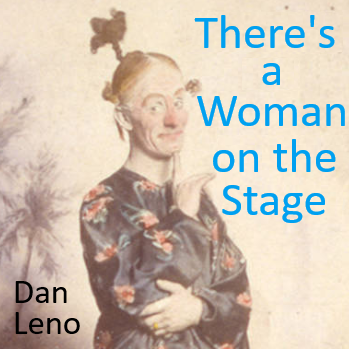
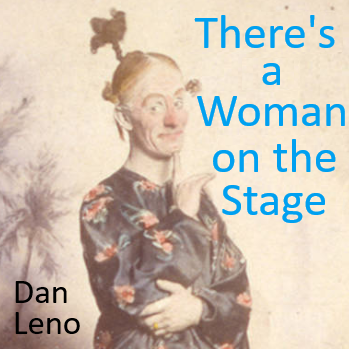
However after Grimaldi’s death in 1837, pantomime became less refined and the Pantomime Dame lost a degree of subtlety in their performance, however in the late 1880s the Pantomime Dame, transitioned from a minor to a main role, and it was Dan Leno, born on the 20th of December 1890, who brought about this transformation, and the Christmas Pantomime we know today was born.
Leno was a celebrated Musical Hall performer, who first created the character of an ordinary woman who resisted life’s harassments, with spirit and a comedic patter that captivated the audience.
Their performance so impressed the manager of the Surrey Theatre, Lambeth, George Conquest, that they engaged them in the role of Dame Durden, in “Jack and the Beanstalk”, in the 1886/87 season, and was the star of the show.
They then went on to appear in every one of Theatre Royal, Drury Lane’s spectacular pantomime’s for the rest of their life, Leno died on “All Hallows’ Eve of 1904.
Before Leno, the character of Dame was generally not a believable character, more a caricature, but Leno transformed the role by creating a credible woman, yes the audience knew she was being played by a man, but by the skill of Leno’s performance, enabled them believed in the character.
Before the Theatre Royal run of appearances, one of the Dames Leno played was Widow Twankey, in Aladin, a character that was created in 1861 for a production at the Strand Theatre.
The origin of the character’s name is I think interesting, Twankey was the name of a cheap Chinese green tea, and Leno became one of the most famous portrayers of this character.
Another famous Dame character made an appearance towards the end of Leno’s pantomime appearances, that of Mother Goose, who was created for them in the 1902-03 season, however this is a different character to the early one of Mr. Simmons in 1806, that Mother Goose was a wicked old witch.
The character of Mother Goose would transform from being humble, poor and plain, to wealthy, haughty and beautiful and finally evolve into the Mother Goose of today, with top-knot and bunion.
Following Dan Leno, was George Robey, 1869-1954, who became a star of pantomime, and the role of the pantomime Dame was one that they enjoyed portraying, and Robey as a comedian was following a tradition of Dames being played by comedians.
Another notable Dame was Douglas Byng, 1893 to 1987, their Dames were refined and upper class, a governess or housekeeper, and they enjoyed playing Queens, deploying innuendo, and their delivery and camp style, often had the audience in raptures of laughter.
Although Pantomime Dames are usually played by male performers, there have been a few exceptions, Nellie Wallace, 1870 to 1948, being one of the few successful female Pantomime Dames, who replaced George Robey as Dame Trot in, Jack and the Beanstalk at the London Hippodrome in 1922.
Arthur Askey, 1900 to 1982, is perhaps not a name one might associated with the character of the Pantomime Dame, and their characterisation differed in that they did not wear make-up apart from panstick, as they believed the audience should be aware that the Dame was a man.
Another well-known character was, Old Mother Riley, who was not just a pantomime archetype, but a character created by Arthur Lucan, 1885 to 1954, who often performed in this role with their wife Kitty McShane, and had a life outside of pantomime.
Innovation was brought to the role of the Dame by George Lacy, 1904 to 1989, who made their debut as a Dame in 1927, aged 19, and they would go on to appear in over 60 pantomimes, whilst Lacy told working class gags, they did so with a posh accent, and they were also responsible for the tradition of costume changes for each scene, costumes that they both designed and made.
The Dame they are most associated with is Mother Goose.
Stanley Baxter was a performer who had their own self-titled television shows, that was most popular from the early sixties to the mid-seventies, displaying their talent for creating a multitude of characters both female and male.
They also performed as a Dame, and back in 1951, they actually appeared with Lacy, and much to Lacy’s annoyance were embraced by the audience.
If one is looking for a glamorous and extravagant Dame, look no further than Danny La Rue, 1927 to 2009, although they are most associated with female impersonation, Danny La Rue holds the record for the longest running West End panto, at the Saville Theatre, London.
This record breaking production was, “Queen Daniella and the Sleeping Beauty”, and ran from the winter of 1968 to June 1969.
A notable Dame of regional theatre is, Berwick Kaler, born on the 31st of October 1946, who is most famous for playing the Dame in the Christmas pantos of the York Theatre Royal, up until 2020, which they wrote and directed.
Another notable Dame was Les Dawson, who outside of pantomime, with Roy Barraclough, created the characters of two Northern housewives, Cisse and Ada, with Dawson portraying Ada Shufflebotham and Barraclough, Cisse Braithwaite, they portrayed these characters on television during the 70’s and 80’s.
It’s not unusual for performers well known outside of pantomime to take the role of the Dame, such as; Christopher Biggins, Paul O’Grady, Julian Clary.
Pantomimes are also popular in; Australia, Canada, New Zealand and South Africa.
In the United States pantomime is not as popular as in Britain, but like in Britain these productions are stage at Christmas, but I wonder for how long.
Since the overturning of Roe vs Wade, and also in effect, the banning of trans women from virtually all forms of sport, the next conservative target seems to be Drag Performance, with many conservative states, attempting to class Drag Performance as adult entertainment.
The legislation that these conservative states would like to enact, would be to ban
Drag Performance being seen by anyone they class as a minor, which depending on the state, could range from 15 years of age, to, if alcohol is served, 21 years, with severe financial penalties if this prohibition is ignored.
I hope no one invites any of those legislators advocating restrictions on Drag Performance to a pantomime, can you imagine their reaction to Pantomime Dames and Principle Boys, “What, a man dressed as a woman and a woman dressed as a boy”.
One could almost imagine them standing up and shouting, “this theatre is closed”, which hopefully will be met with, “Oh no it isn’t”.
This episode was written and presented by me, Carolyne O’Reilly, thank you for listening.
Next time, hopefully within three weeks, “The Kings and Queens of Drag”.