
Transcript of Trans Lives Matter
I spent a morning and early afternoon writing the script for what was going to be the next episode, which was going to be a bit lighter than the previous, and then I had a break, and thought I would catch up on the day’s news, what a mistake!
On that particular day, which was a Wednesday, the headline was “The Supreme Court’s ruling on the interpretation of the meaning of ‘man’, ‘woman” and ‘sex’, in the Equality Act 2010”, with coverage outside The Supreme Court, where a group of cis gender women where celebrating that trans women had been judicially othered, although there was no mention of trans men, for which this ruling would equally apply.
It felt like the world I thought I knew had vapourised in the flash of twin sun brightness, and all that was left was a wall shadow of who I was, too much?
Well, to be told that you are no longer in effect a woman, did feel pretty Earth shattering.
Welcome to “Trans Wise Trans Strong”, I am Carolyne O’Reilly.
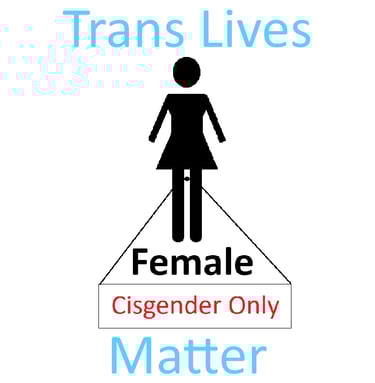
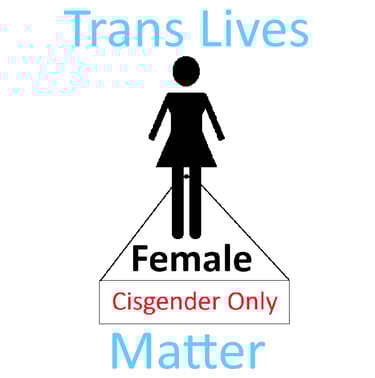
Episode four, “Trans Lives Matter”
The Supreme Court ruling is long and detailed, some 87 pages of legalese, however there is an article, which I would recommend reading, on “The Gist” website by Simon McGarr, The Gist: Trans rights are Data rights, which was very helpful in my understanding of this appeal.
What was noticeable about the news coverage, was the emphasis on “biological sex”, and the presentation of the celebrating group of cis gender women outside of The Supreme Court.
But at least, and this is not always the case, the trans perspective was also sought, which was a deep worry about the safety implications this ruling would have on trans women.
But was the fact that this the ruling would equally apply to trans men appreciated, would these cis gender women be so celebratory with trans men using their female toilets.
But consider again that phrase, “biological sex”, I feel it is a meaningless phrase, what actually does biological sex mean, I would suggest there are many definitions of “biological sex”.
Perhaps it is defined by the sex chromosomes?
Well, for the majority of people they will be, either XX usually associated with being assigned female at birth, or XY usually associated with being assigned male at birth.
But what about Intersex/DSD conditions where people have three sex chromosomes, the XXY of Klinefelter syndrome, the XYY of Jacobs syndrome or Triple X syndrome.
And then there is the single X of Turner syndrome.
And what is the effect of an extra X or Y chromosome?
For Klinefelter’s, early life may have no obvious symptoms, but later in life, these symptoms may develop; broader hips, poor muscle tone, enlarged breasts, infertility and erection problem.
Whereas Jacobs syndrome has fewer symptoms, but some of them are; being taller than average, a large head, widely spaced eyes, and some may be infertile.
Triple X syndrome typically results in being taller than average, and some may have widely spaced eyes, curved little fingers and flat feet.
Or what about the single X chromosome of Turner syndrome?
Turner’s may result in being shorter than average, having under developed ovaries, which may result in no periods, infertility and a slightly shorter than average life expectancy.
The various symptoms of these chromosomal Intersex/DSD conditions, results in a phenotype, the observable characteristics of an individual, demonstrating that a strict binary interpretation of sex is somewhat flawed.
The first loss for biological sex.
Until about 8 weeks of development, female and male foetuses are indistinguishable, but for a foetus with an X and Y chromosome to become male, the testes need to develop.
However a fault with any one of five different genes, can result in the failure of the testes to develop, for example the Sex-determining Region Y gene.
This testes development failure is an Intersex/DSD condition called Swyer syndrome, which results in, spoiler alert, female external genitalia, therefore the phenotype is female, I think we may be onto something here, and before you ask, yes the internal sex organs are also female.
Or to put another way, such an individual would be assigned female at birth.
And another Intersex/DSD condition, is XX male syndrome, however although two X chromosomes are present, the external genitalia are typically male, therefore they would have been assigned male at birth.
Again a loss for biological sex.
Maybe biological sex can have a win with the sex hormones and how individuals respond to them.
Sorry, I offer you the Intersex/DSD condition, Complete Androgen Insensitivity Syndrome, where an individual is insensitive to androgens which are responsible for the development of male characteristics, as a result their external genitalia are female, although unlike Swyer syndrome, they do not develop female internal sex organs.
Another loss for biological sex.
If the response to the sex hormones didn’t offer a win, what about their levels?
A cis gender woman, that is an individual assigned female at birth, as well as her Estrogen and Progesterone level, will also have a level of Testosterone, albeit very much lower than someone assigned male at birth.
Similarly, a cis gender man will have a level of Estrogen and Progesterone, but again much lower than someone assigned female at birth.
So how would a trans woman’s levels compare after about a year or two on gender affirming hormone therapy, they would essentially be within the same range as a cis gender woman, and likewise a trans man’s levels would be within the same range as a cis gender man.
Another cross against biological sex.
At this point I would like to examine a question asked on BBC’s Question Time Leaders' Special for the 2024 Election, which was aired on the 20th of June 2024.
In response to an audience member’s question, Fiona Bruce asked Sir Keir Starmer, “So Rosie Duffield said in 2020 only women have a cervix, you said in response, ‘that’s something that shouldn’t be said, it’s not right.’”
Sir Keir responded by saying.
“Well look on the biology, I agree with what Tony Blair said the other day in relation to men having penises and women having vaginas.”
And then added a bit later.
“...on the biology, that doesn’t help on the gender, there are some people who don’t identify with the gender they are born into…”.
Let’s unpick what he said.
“..some people don’t identify with the gender they are born into…”,
On the Mayo Clinic’s website, there is a very informative article titled, Children and gender identity: Supporting your child by Mayo Clinic Staff
It explains that, “A person's assigned sex at birth, gender identity, the internal sense of being male, female, neither or both, gender expression and sexual orientation are separate things.”
Also that it is between 18 and 24 months that a child becomes aware of gender labels, and not until around 3 years that most will have settled on their gender identity.
However, for a trans child their gender identity will differ from the sex they were assigned at birth.
I think Sir Keir could have phrased that better by saying, “…some people who don’t identify with the sex they were assigned at birth.”
What about, “men having penises and women having vaginas.”, by which he presumably meant cis gender men and women.
Well, a trans woman who has had genital reconstruction surgery, also known as gender affirming surgery, will have a neovagina, labia major and minor and a clitoris.
For trans men the surgery is more complex, but the creation of a phallus and scrotum is possible.
Therefore again the argument who is a man or woman based on their external genitalia, is also flawed thinking, another strike against biological sex, me thinks.
I make that, five to zero against biological sex being a meaningful measure of who is female or male.
Lastly what about Rosie Duffield’s comment about, “only women having a cervix”, well a trans man will have a cervix, unless they have had a hysterectomy, however not all cis gender women have a cervix.
There is an Intersex/DSD condition, Mayer Rokitansky Küster Hauser syndrome, which results in the vagina not fully developing, no cervix, and in most cases the absence of a uterus.
Does the absence of a cervix and uterus mean they are not women, of course not, therefore one could not argue that having a cervix is a criteria for judging who is a woman, given that there is an exception to this.
However this appeal did not concern itself with any medical justification of “biological sex”, although it did mention it 66 times, but and I am quoting directly from the first sentence of the Judgment, “This appeal is concerned with establishing the correct interpretation of the Equality Act 2010…”
That word, “interpretation”, even without knowing the ruling, would be worrying, then they said.
“On the one hand, women have historically suffered from discrimination…”,
and then,
“On the other hand, the trans community is both historically and currently a vulnerable community…”
Oh dear, already women and the trans community, or rather trans women, are separately referenced, time to unfurl that metaphorical red flag.
Then they state, they would not adjudicate on the meaning of “gender” or “sex”, nor define the meaning of “woman” other than when used in the provisions of the Equality Act 2010, or EA 2010.
But they were happy, to accept “…the terminology used by the Scottish Ministers in their written case for the purposes of this judgment and have adopted the following terms.
A person who is a biological man, ie who was at birth of the male sex, but who has the protected characteristic of gender reassignment, is described as a “trans woman”…”
And there was a similar description for a person who they describe as a biological woman.”
I bet they were happy, and there is the first mention of “biological”, and I think those sentences begin to make clear the direction of travel of this appeal.
You may think, given that biological sex is mentioned 66 times in the ruling, that it must have multiple mentions in the Equality Act 2010 well it is mentioned precisely, zero times, not a single mention.
Then they say, and I slightly summarise.
“We describe trans women and trans men who have obtained a gender recognition certificate as “trans women and trans men with a GRC…”
Perhaps given the mentions of, “trans women”, and “trans men” in the appeal, these terms must surely appear throughout the Gender Recognition Act 2004, or GRA 2004, again not a single mention throughout, neither was “trans woman” and “trans man”.
Although under “Section 21. Foreign gender change and marriage”, in the section, “Supplementary: Cross Heading: Changes over time for”, and under “Section 25. Interpretation” in the section headed “Changes over time for”, appears the word “Transsexualism”, just once in each section.
Time to start waving that flag.
It is paragraph 26 that reveals the heart of the case, where they state, and I paraphrase, “The focus of the appeal is the position of the small minority of trans people who possess a full Gender Recognition Certificate.”
Then there are four pages devoted to the Sex Discrimination Act 1975, or SDA 1975, which they frame as legal background, seems reasonable, except for the fact that the SDA 1975, along with the Equal Pay Act 1970 and the Sex Discrimination Act 1986 were repealed by, you’ve guessed it, the EA 2010.
I find the press release instructive, as given the length of the ruling, this may have formed the basis of the initial reporting.
Under the heading, “Reasons for the Judgment”, the first paragraph mentions that repealed SDA 1975, briefly summarising its intent and describes what were the exceptions to the general rule, which ends with, “.. required separate facilities to be provided for men and women”.
But the clincher is at the end of the paragraph, where it states, “Parliament used the words ‘man’ and ‘woman’,” and ends with, “There is no doubt that Parliament intended the words ‘man’ and ‘woman’ to refer to biological sex.”
Which suggests that these judges are so learned, that they are not only telepathic, but their telepathy can transverse time, as they state that they believe they know what was in the minds of parliamentarians in the mid-seventies, although I doubt those Parliamentarians were that aware or familiar with what it meant to be transgender.
The next heading is, “Interpretation of the Gender Recognition Act 2004”
So how did they interpret the GRA 2004.
What is revealing, was that they shoehorned “trans women” and “trans men”, into their interpretation of the GRA 2004, a judicial sleight of hand that would have garnered the admiration of the Magic Circle.
Also another word that heavily featured was that word, “interpretation”, 73 times in fact, and the feeling of foreboding I had by its first mention was fully justified.
Also of note is Section 9, subsection 1, of the GRA 2004, which was only partially included in the press release.
What was not included was, “(so that, if the acquired gender is the male gender, the person’s sex becomes that of a man and, if it is the female gender, the person’s sex becomes that of a woman).”
I can see why this was excluded, although it is present in the full judgement.
However Section 9, subsection 3, of the GRA 2004, really courted their interest, with 19 references in the full ruling.
But what does Section 9, subsection 3 state?
Quoting verbatim it says, (3) Subsection (1) is subject to provision made by this Act or any other enactment or any subordinate legislation.
So what exactly does that mean, my understanding is.
The phrase, “is subject to provision made by this Act” means, wording within the Act could modify the rules of subsection 1.
Next, “any other enactment” means, current legislation could modify the rules of subsection 1.
Finally, “any subordinate legislation.” Means, future legislation could modify the rules of subsection 1.
However, paragraph 103 of the ruling, revealed that the court believed that an exception to Section 9, subsection 1, applied not to just present and future, but also to past legislation, such as the SDA 1975, now we know why they were so obsessed with that legislation.
Oh, did I mention that it had been repealed.
In Paragraph 105 they reiterate their belief, which I summarise, “Limiting the application of section 9(3) to legislation enacted after the GRA 2004, might produce results adverse to the trans community”, which beggars belief, given the impact this ruling has had on the trans community.
They reference the case of a trans man who gives birth to a child as a result of fertility treatment, and whether a Gender Recognition Certificate, GRC, alters the application of “mother” and “father”, the court ruled it did not, and having “mother” recorded on the birth certificate was correct.
They also site the ruling of an Employment Appeal Tribunal, EAT, in regard of a complaint of unlawful discrimination by a consultant who claimed that their contract was not renewed because of their gender critical views, and that these views where not in breach of the GRA 2004.
The EAT judgement concluded by considering if section 9(1) of the GRA 2004 precluded protection under section 10 of the EA 2010 and article 9 of the European Convention on Human Rights, ECHR.
Before revealing their conclusion, what does Section 10 of the EA 2010 state, “any religious or lack of religious or philosophical belief is protected”, and the ECHR, “everyone has the right to freedom of thought, conscience and religion.”
It may not come as a total surprise that the EAT found section 9(1) of GRA 2004 did not preclude this protection.
The EAT further stated it was acceptable for someone to believe a trans woman with a GRC was not a woman, and gave as an example, persons of faith who they said were intitled to believe that a civil partnership is not a valid marriage, and that only marriage between a man and a woman is acceptable.
Do I detect a whiff of homophobia?
And what was the Supreme Court’s opinion of the EAT ruling, they found it a comprehensive and impressive judgment, Wow! I didn’t see that coming!
But mention of the EA 2010 leads us to the next main heading in the press release.
Interpretation of the EA 2010
The court stated, and I quote directly from the press release. “There is no provision in the EA 2010 that expressly addresses the effect of section 9(1) of the GRA 2004”, but remember that word, “interpretation”.
The court decided that a careful analysis of the provisions of the EA 2010 was required to determine if they indicated that a biological meaning of sex is intended and/or if a certificated sex definition would render the provisions of section 9(1), incoherent or absurd.
Unsurprisingly they determine that as a matter of ordinary language, the provisions relating to sex discrimination can only be interpreted as referring to biological sex.
They give as an example the provisions in the EA 2010 relating to pregnancy and giving birth to a child, and stated. “As a matter of biology, only biological women can become pregnant.”, and further, “these provisions are unworkable unless “man” and “woman” have a biological meaning”.
They state that interpreting “sex” as certificated sex, would undermine the protected characteristic of sex in an incoherent way, in respect of the definition of “man” and “woman”.
Further, they state that a certificated sex interpretation would create two subgroups of those with protected characteristics of gender reassignment, those with a GRC and those without, and that asking if someone had a GRC would breach their privacy.
They then list examples where in their opinion certificated sex interpretation would weaken protection.
They reject that “woman” and “sex” can refer to biological sex in some sections of the EA 2010, and certificated sex in others.
They conclude that a person with a GRC in the female gender does not come within the definition of a “woman” under the EA 2010, thanks for that!
The press release ends, with the heading Protection from Discrimination, which would almost be funny, almost, that this interpretation of the EA 2010 does not remove protection from trans people, with or without a GRC.
But what might be the effect of this ruling, I believe it will allow some people to; “cry havoc and let slip the dogs of prejudice.”
Before examining the ruling, I mentioned that it did not concern itself with any medical justification of “biological sex”, which I still contend is a meaningless phrase, and further, the sense of knowing who you are in terms of femaleness or maleness, is determined by ones psychology, it is an innate sense of self.
In the United States before the Civil Rights Act of 1964, places and organisations could display signs, “Whites Only”, today it feels like there is a gendered equivalent of, “Whites Only”.
This episode was written and presented by me, Carolyne O’Reilly, thank you for listening.
Next time, “There’s A Woman On The Stage!”